The Itchiku Kubota
Art Museum
Kawaguchi-ko
Japan

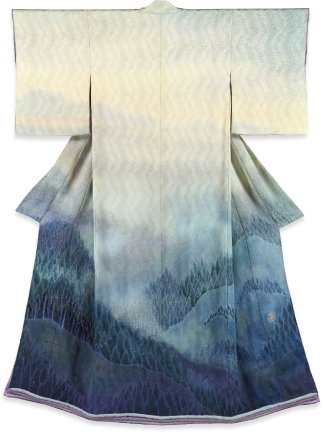
For many years Itchiku Kubota dreamed of establishing an usual and beautiful museum that many people could visit to view his work. At the age of 74 he finally found what he considered the perfect location – near Lake Kawaguchi, with a panoramic view of Itchiku’s beloved Mount Fuji. Kubota had long been fascinated by the mountain that became a major theme in his work. It can be seen in the eleven Fuji kimono in his collection that create a compelling vision of the mountain’s grandeur and its physical and mystical presence.
Kubota purchased the site and began the construction, but he had only limited funds to use. After three years of construction, in 1994, the Itchiku Kubota Art Museum was opened to the public.
The museum became permanent home to some of Kubota’s artistic creations and invited visitors to discover the artist who created them. The structure and environment of the museum represented the artist’s unique – some say idiosyncratic – worldview.

Exploring the Gaudi – inspired buildings, visitors discover the heart and soul of Itchiku Kubota and share his passion for primitive arts and crafts in a peaceful shrine of Nature created by the artist’s vision.
The design of the main hall is based on traditional Japanese architecture, but the structure evolves into a complex and spectacular pyramid-like puzzle of layered huge wooden beams that soar thirteen meters skyward. The entryway to the museum is embellished by the mix of coral and limestone from Okinawa and sculptural ironwork by present-day artists. The dramatic hand-carved doors, sourced from India, Africa and Southeast Asia, enhance the space. Kubota planted the Japanese maples on the site and worked with expert gardeners to place the decorative rocks, quiet ponds, streams and waterfalls to ensure the audio and visual delight for visitors making their way to the museum. The artist’s former workshop is also on site.
Itchiku Kubota
Art Museum
To plan your visit to the Itchiku Kubota museum in Kawaguchi-ko, Japan, please visit www.itchiku-museum.com. Alternatively, please call +81 555-76-8811 or email info@itchiku-museum.com.

Access

Address
Discover Kubota’s kimono online